Room to Think: Creativity and Community on Display in Omaha
A recap of the Pre-NOSB Gathering in Omaha, May 11, 2026
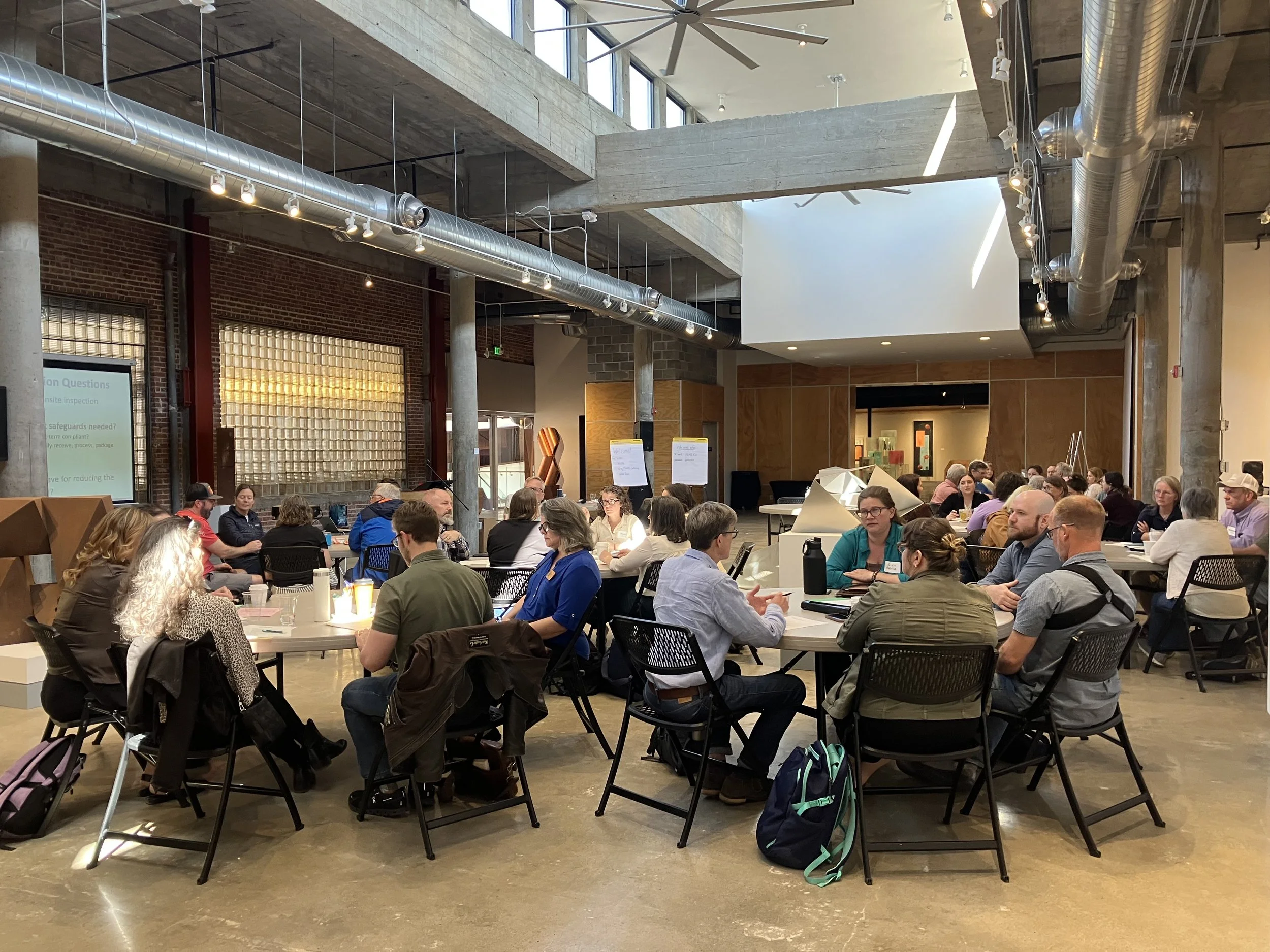
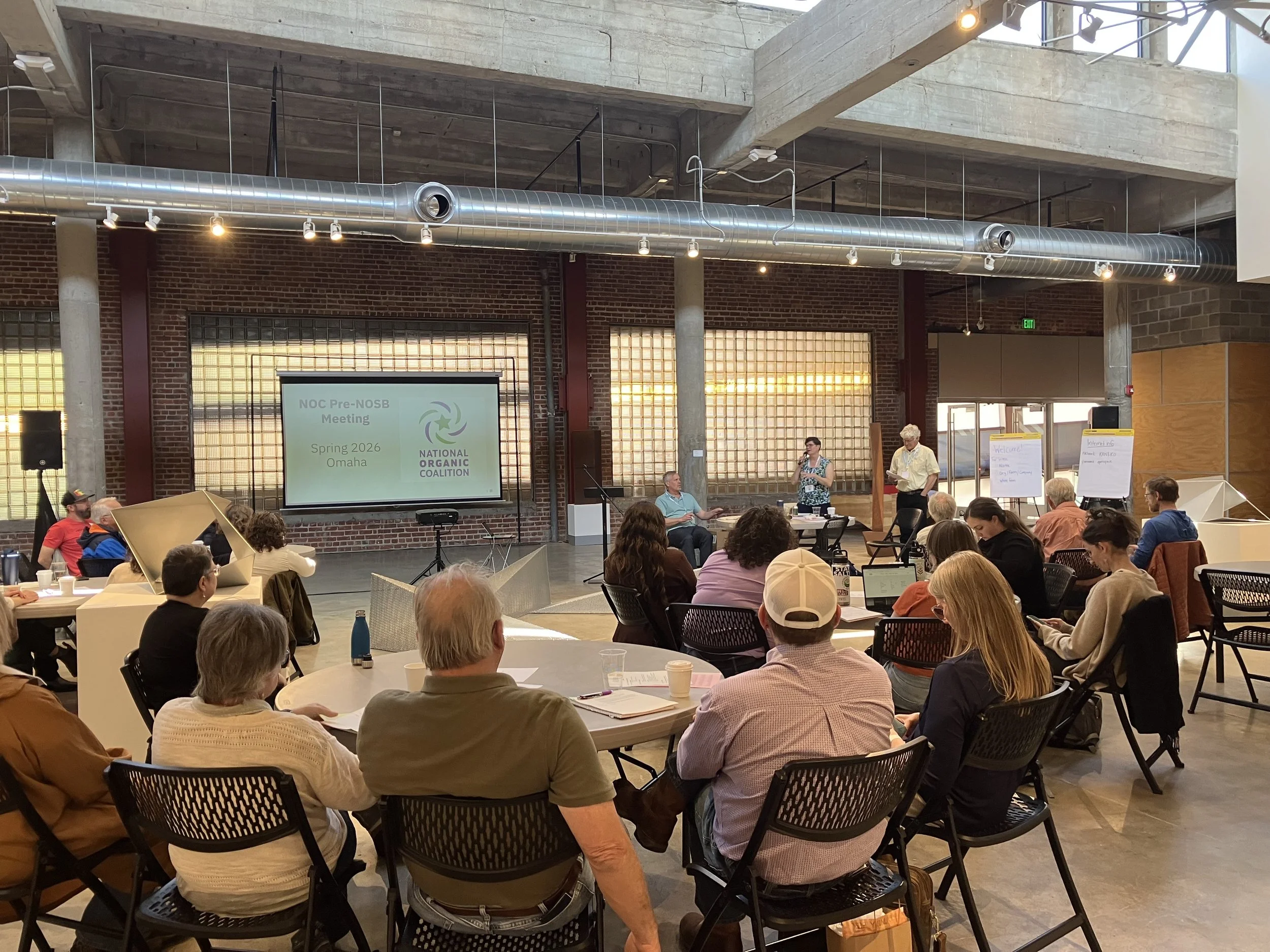
Fifty members of the organic community convened at KANEKO in Omaha, Nebraska on May 11, 2026. The daylong event offered updates on federal policy and the National Organic Standards Board meeting topics, a farmer panel, and discussions on the future of certification. As the first in-person Pre-NOSB gathering since October 2024, the art gallery and creative space was the perfect backdrop for considering what we as a community have sculpted and how we might consider reshaping it.
NOSB Updates
NOC's NOSB Specialist, Steve Ela, opened the day with an overview of the Board’s spring meeting agenda, but first emphasized the concern that five board member appointments remain pending. He walked through NOC's positions on key agenda items, ranging from chlorine materials and Chitosan to pear esters and e-commerce, as well as the status of past NOSB recommendations. Full details on the Board’s Proposals and Discussion Documents can be found here and NOC’s comments can be found here.
Policy Concerns, and Some Bright Spots
NOC Policy Director Steve Etka painted a mixed picture on the federal front. The House-passed Farm Bill falls short for organic, certification cost-share funds still haven’t been released, and the Organic Livestock and Poultry Standards rule faces renewed threats. On the brighter side, congressional support for organic appropriations is growing. The main message: the organic community needs to speak up now, particularly as the Senate Farm Bill takes shape. The National Organic Coalition has two active action alerts to help make it easier for your voice to be heard.
He also provided an overview of a bipartisan amendment included in the House Farm Bill that influenced the small group discussion prompts during the afternoon portion of the Pre-NOSB agenda. The amendment would create flexibility in the Organic Foods Production Act to allow USDA to develop risk-based certification procedures, including changing the annual on-site inspection requirement for U.S. operations deemed low risk.
Farmers on the Ground
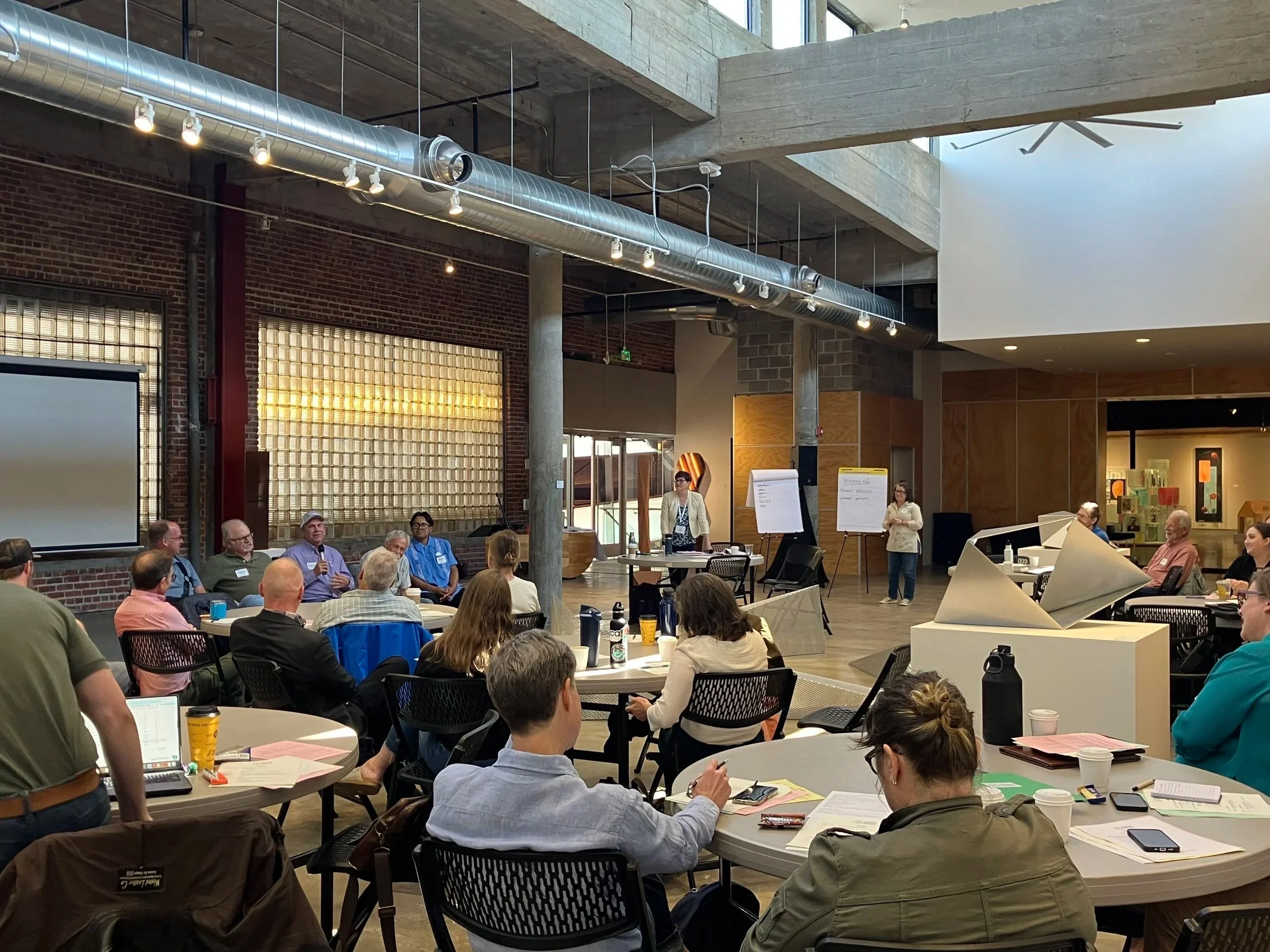
A panel of farmers offered a window into what organic looks like on the ground right now. The farmer panel included:
Sandro Lopes of NaTerra Farms in David City, Nebraska;
Noah Wendt of A&W Farms in Cambridge, Iowa;
Steve Boyda of E&V Peeks Family Farm in Marysville, Kansas;
Tom Lundahl of Meristem Farm & Nursery in Papillion, Nebraska; and
Ed Reznicek from Goff, Kansas
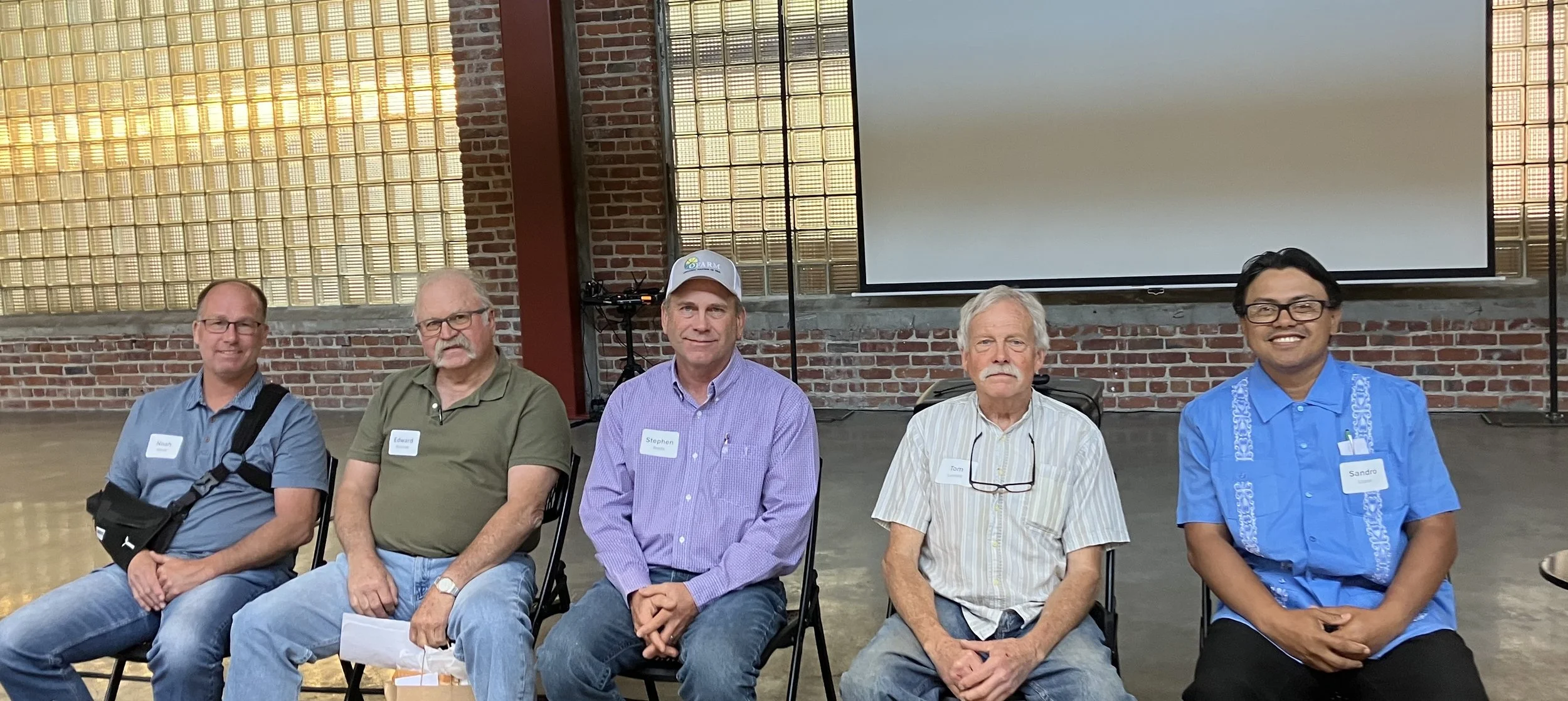
From Left to Right: Noah Wendt, Ed Reznicek, Steve Boyda, Tom Lundahl, and Sandro Lopes
Some key themes emerged:
Organic systems help in times like these. Many panelists noted that years of building on-farm fertility through cover crops and livestock integration have left them less exposed to the input cost pressures currently squeezing conventional agriculture. When asked what is going well, farmers across the panel pointed to the value of diversity — in crops and in income streams. One farmer has noted a positive shift in his rotation from corn and soy, to adding buckwheat, kernza, oats, and peas to the mix.
The integrity of the organic seal is crucial. Multiple panelists raised concerns about staffing cuts at the National Organic Program and USDA more broadly, along with questions around implementation of the Strengthening Organic Enforcement rule. One farmer noted a difference in expectations around how the rule is playing out in practice, a sign that clarity and consistency in enforcement still has room to improve. Another mentioned the challenge of the extreme peaks and valleys in the organic market caused by imports compared to the conventional market.
Relationships are the real infrastructure. Trusted marketers, long-term buyer partnerships, engaged certifiers, and connected communities came up again and again as foundational to success. For many of the panelists, it's the relationships, not just the practices, that make organic work.
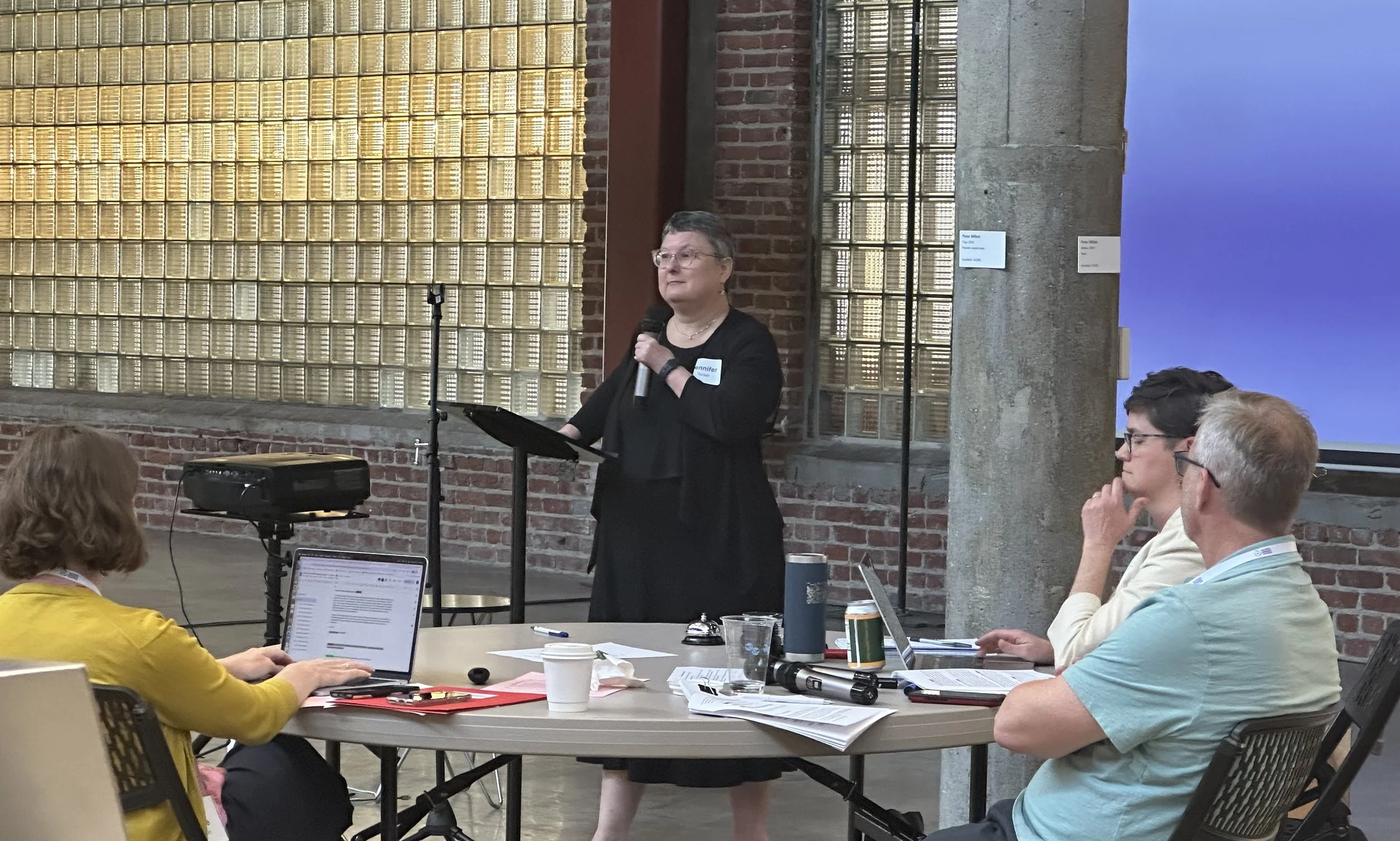
Dr. Jenny Tucker on Enforcement and Culture Change
Dr. Jenny Tucker, Deputy Administrator of the USDA National Organic Program, joined in the afternoon to answer questions from NOC and the audience. She highlighted wins from the Strengthening Organic Enforcement rule, including the interception of $1.5 million in fraudulent shipments since November 2025 in partnership with Customs and Border Protection.
Dr. Tucker reinforced the importance of community voice, not only in NOSB comments and during rulemaking, but after rulemaking. Clear letters with concrete examples of why a rule matters and what we are asking for.
She also spoke candidly about the harder change management challenge: shifting the certification culture from checklist compliance to critical thinking at every level of the system. That's not a small task.
The goal, Dr. Tucker described, is about rewarding those who are experienced enough to determine whether something is compliant without just following the forms and building the culture and capacity to get more people there. It’s no longer about certifiers checking every box, but about being able to explain why they made the choices they did and that a reasonable person would agree it makes sense. There's a lot of grace built into the system, she suggested, and that grace is what makes the system better and more resilient.
Rethinking the Annual Onsite Inspection Requirement
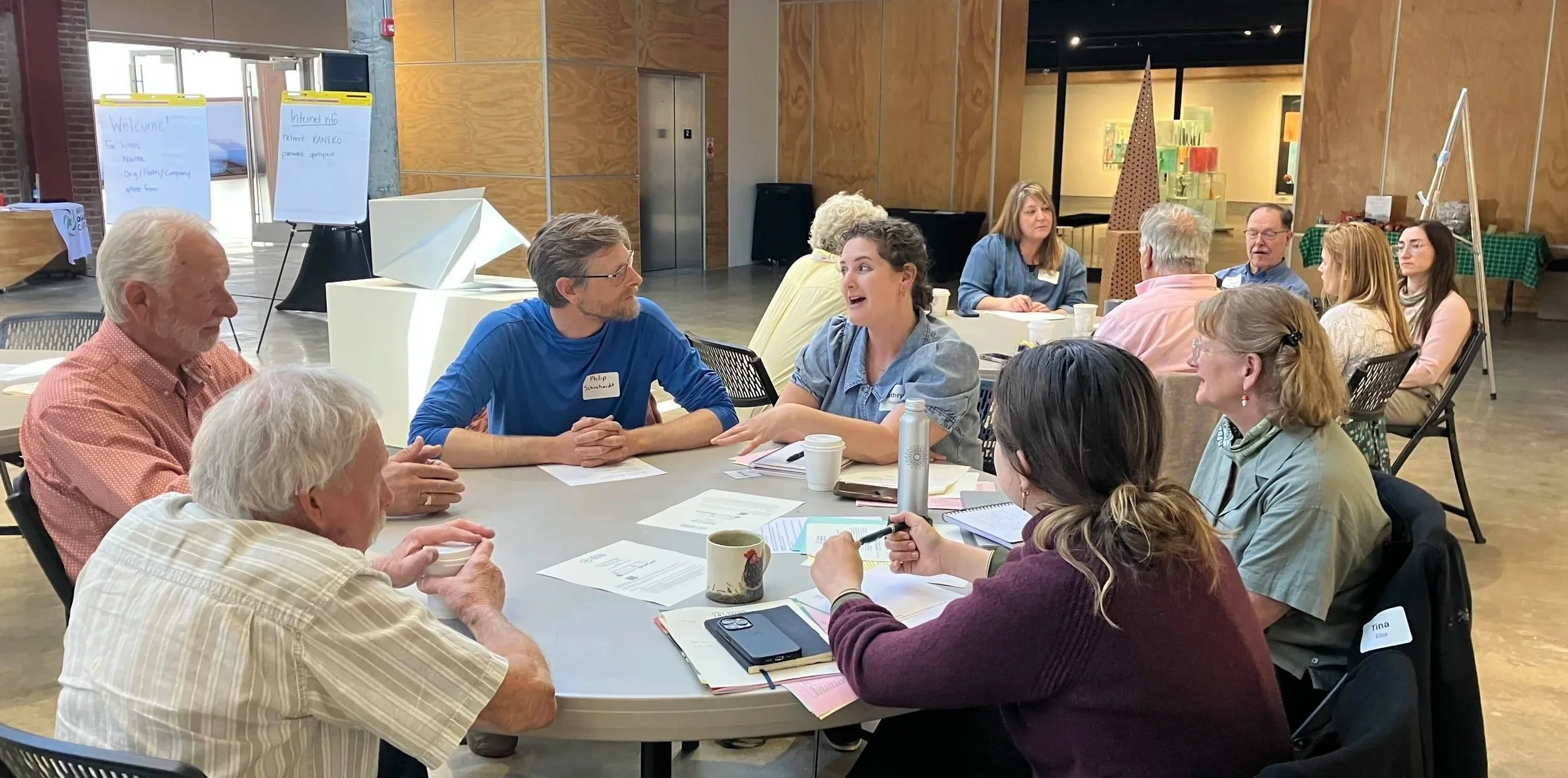
A session in small groups asked attendees to think creatively about how we can reduce the burden of organic certification without compromising the integrity of the seal. The question on the table: should the annual onsite inspection requirement change?
There was broad agreement that meaningful improvements are possible without touching the annual onsite requirement itself. Inspections can be more targeted, zeroing in on areas of actual risk and year-over-year changes rather than running through the same checklist every time. Our conversation with Dr. Tucker confirmed that the NOP already believes this flexibility is possible within the existing regulations. Could inspection costs be reduced by coordinating with others already scheduled to be on-site, or by shifting toward a peer-to-peer inspection model for some lower-risk operations? Can the Organic System Plan follow a food safety model, becoming a living reference document rather than something that gets filed away after certification? Is there a way to bring back a culture of technical assistance?
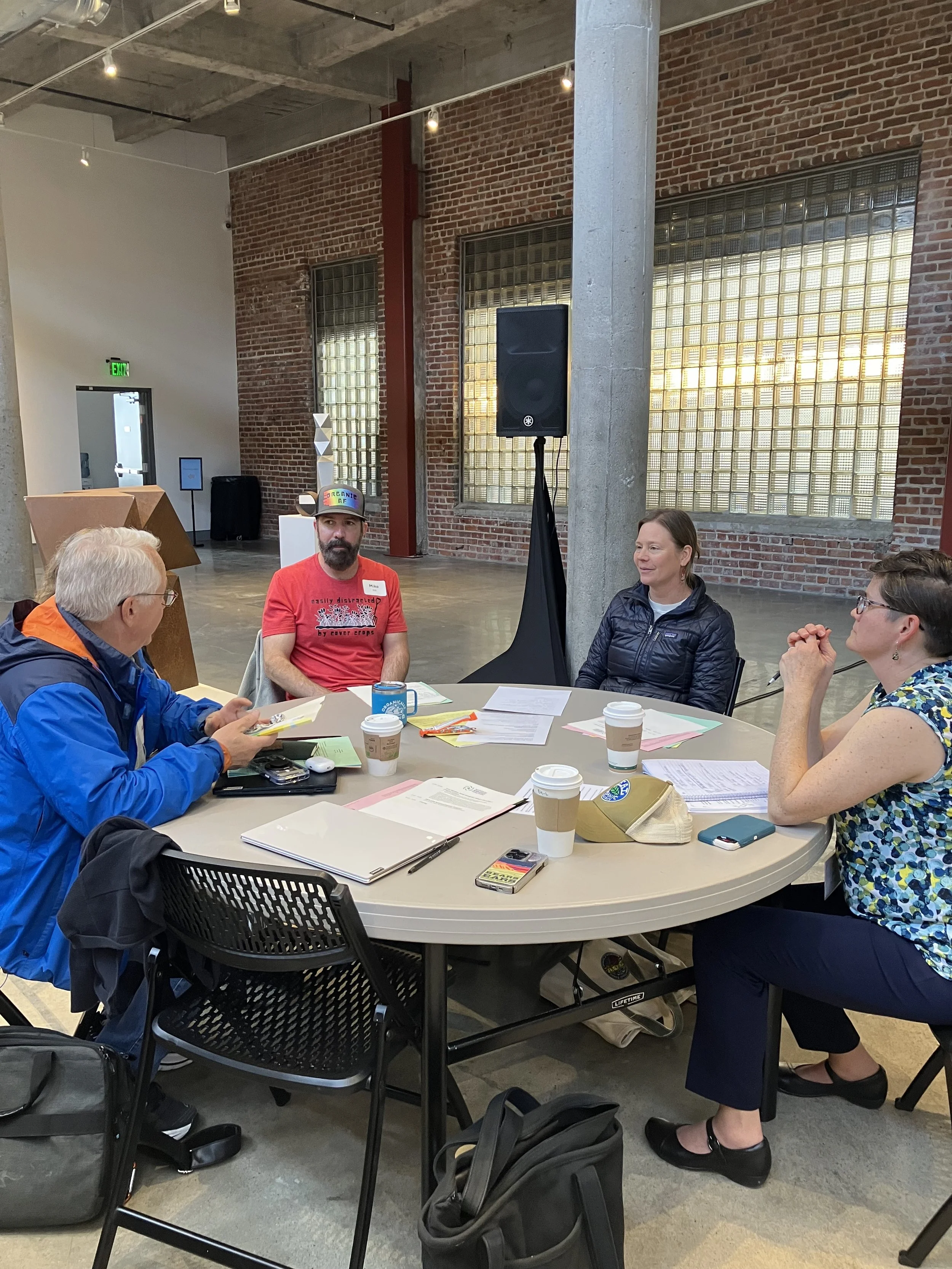
Other ideas surfaced around structural changes to how certification works more broadly: expanding group certification options, exploring a two-tiered system that treats direct market operations differently, and looking to models like Washington State's $500 inspection credit as a potential template for inspection cost relief. Expanding this to other states could act as a supplement to the federal organic certification cost share program that plays a critical role in keeping certification within reach for smaller and diversified operations, but faces challenges like USDA not releasing already authorized funds.
The conversation grew more nuanced when it came to the annual onsite requirement itself. Some attendees saw a real case for offering flexibility with the requirement for annual onsite inspections, particularly for operations without a physical location that don't handle the product and for operations that could be clearly defined as low-risk. There was recognition, though, that clearly defining what low-risk actually means is its own challenge that would need to be worked through carefully.
Many participants expressed they do not support changing the requirement for annual onsite inspections because they see that component as foundational to organic integrity. But underlying the discussion was a sense that something has to give. If the costs and burdens of certification are pushing family-scale operations out of certified organic, or preventing them from becoming certified, the system risks losing the very farmers who built organic's reputation. The integrity argument for the annual onsite inspection is real, but so is the argument for a certification system that doesn't price out or exhaust the people at its foundation.
The Work Ahead
The common thread throughout the day was a community looking forward, clear-eyed about real threats to program staffing, the integrity of the seal, and the future of the movement, but committed to charting a promising path forward and embracing creativity in the process. As one farmer put it, the challenge is figuring out how to stick a toe in the water without turning over the boat.
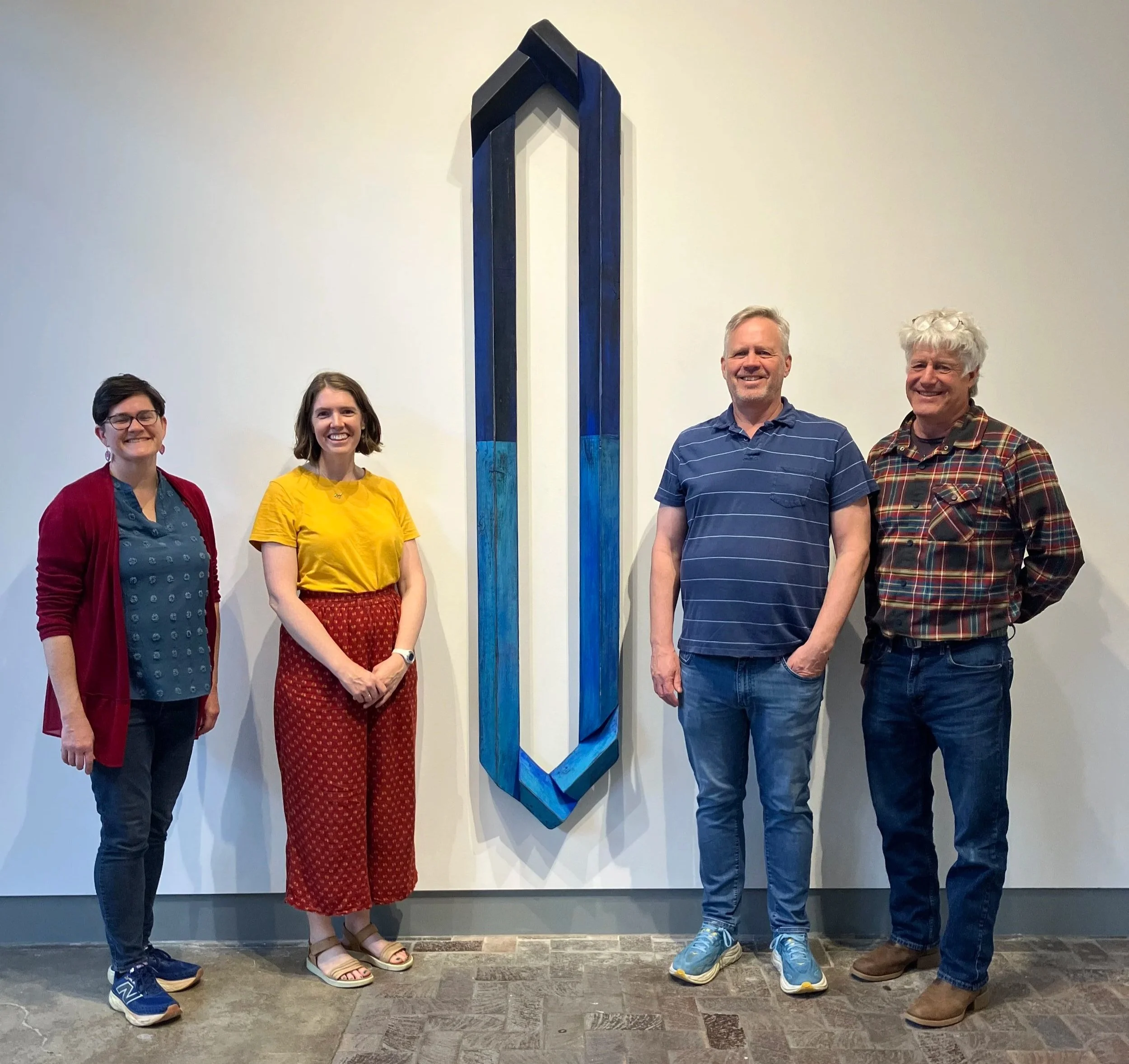
With gratitude, the NOC team (from L to R: Abby Youngblood, Callie Herron, Steve Etka, Steve Ela)
The National Organic Coalition is grateful for the opportunity to create spaces like the Pre-NOSB meeting, a place where the organic community can come together, across all the different roles we play, to wrestle honestly with the challenging topics of the day. Events like this don't happen without support. If you value this work and want to help make it possible, please consider making a donation to NOC.