Spring 2026 NOSB Decision: Chlorine in livestock drinking water
The Spring 2026 National Organic Standards Board (NOSB) meeting in Omaha wrapped with 11 of 12 motions passed, covering a range of issues that could prompt National Organic Program (NOP) action.
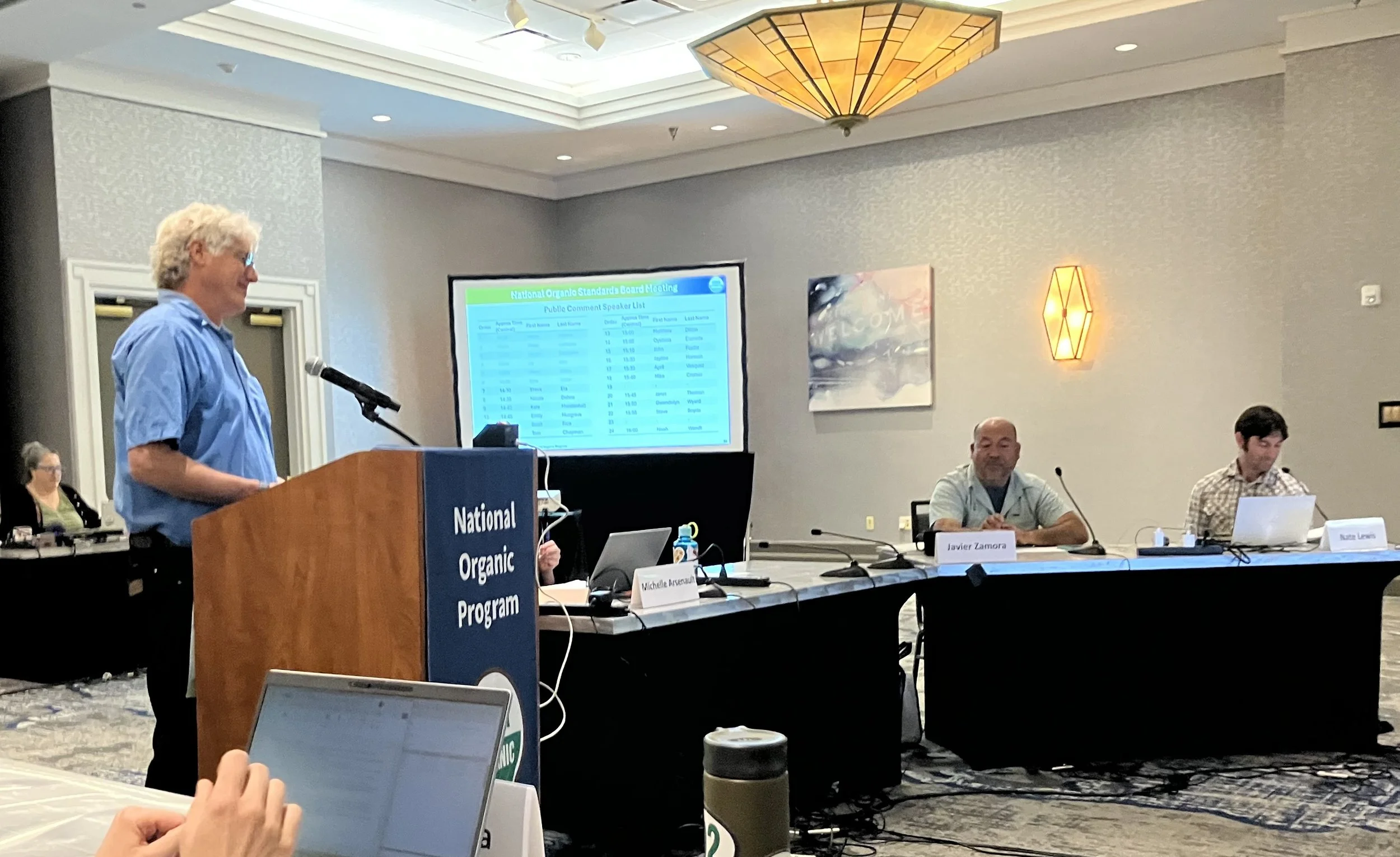
Steve Ela, NOC NOSB Specialist, gives oral comments at the recent Spring NOSB meeting in Omaha.
One motion, among many, NOC is watching involves adding language to the chlorine annotation on the National List of Allowed and Prohibited Substances to allow its use in livestock drinking water. NOC supports this use of chlorine in principle, but we raised a specific concern in our public comments: any resulting rule change should not, intentionally or unintentionally, create significant new water testing burdens on farmers trying to demonstrate compliance with the annotation's reference to the Safe Drinking Water Act. It's the kind of detail that, if overlooked, could have on-farm consequences — and is exactly the type of thing NOC tracks, sometimes for years, so that our members don’t have to.
Now that the motion has passed, the next step is for NOP to consider whether to initiate rulemaking. NOC will continue to track this process and will engage NOC’s internal NOSB subcommittee to review any proposed rule language, develop comments, and make sure our member organizations’ concerns are part of the official record. NOP is required to consider all public comments when revising and finalizing any rule, which means public engagement at every stage, from NOSB to rulemaking, matters.
New to the NOSB process? The NOSB is one of the most important avenues for public input in organic agriculture. Twice a year, this federal advisory board meets to review petitions, debate policy, and make recommendations to the USDA NOP that shape the rules governing organic. Anyone can participate. Learn more about the NOSB and how to get involved here.