Why Are We Losing Organic Farms? What We Learned
On January 16, NOC brought together over 200 stakeholders to tackle a tough question: Why are we losing organic farms?
What the Data Shows
Mallory Krieger from the Organic Agronomy Training Service (OATS) analyzed the USDA Organic Integrity Database and found mixed news. From 2024 to 2025, we gained 3,539 newly certified operations but lost 2,825 that voluntarily surrendered—a net gain of 792 operations overall.
The details reveal important patterns:
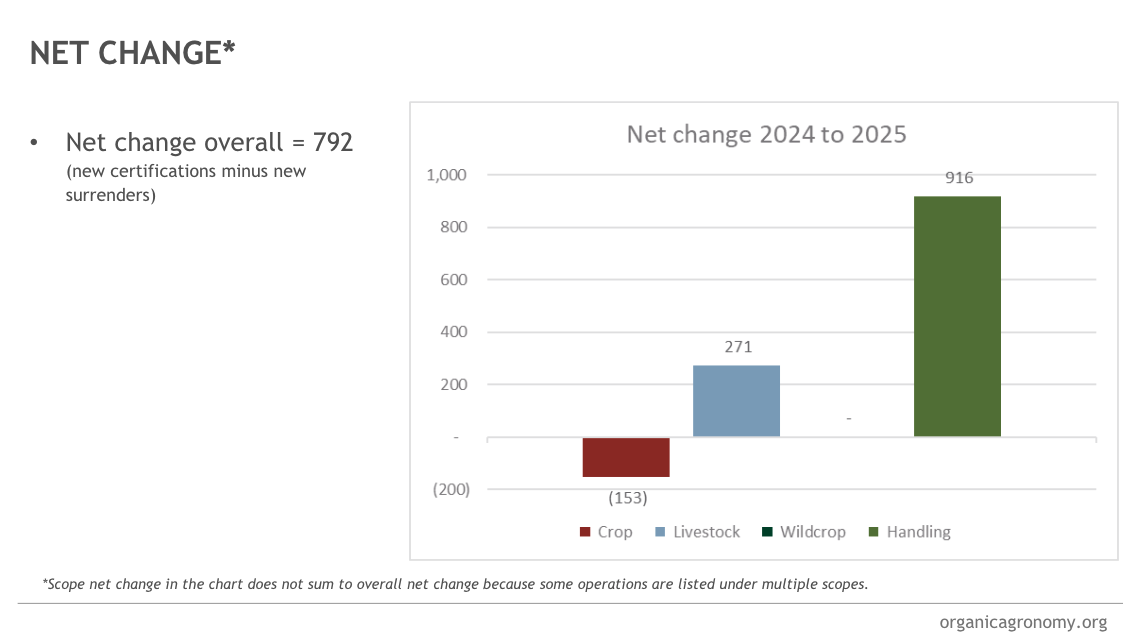
From Mallory Krieger’s presentation on Who is Leaving Certification - Insights from OID
Geography matters: New certifications cluster around cities like Los Angeles, New York, and Seattle. Exits concentrate in rural areas—California's Central Valley, the Midwest, Wisconsin, and Pennsylvania.
Crops are struggling: Crop operations had a net loss of 153, while livestock gained 271 and handling surged by 916.
We're losing acres: A net loss of about 40,585 acres, with Idaho alone losing nearly 92,000 acres (32% of the state's certified organic land).
Size differences: Exiting operations average 355 acres; entering ones average 203 acres.
Why are farmers leaving? Data from three certifiers showed:
40-50% stopped farming organically but stayed in agriculture
30% went out of business entirely
8% cited certification costs as a reason for surrender.
Just 3% mentioned paperwork burden.
The Research Context

Dr. Carolyn Dimitri, Associate Professor, NYU
Dr. Carolyn Dimitri from NYU helped us understand the broader picture. Her research shows farmers enter organic for values (environmental stewardship, health) or economics. But those who exit typically cite:
Difficulty getting organic prices
Lack of market access
Pest and disease management challenges
Labor costs
Processing access (especially for livestock)
The critical period? The first five years, especially year three.
Key insight: Economic factors—not regulatory burden—drive most exits.
View Dr. Dimitri’s presentation.
What You Told Us
We split into breakout rooms to dig deeper. Here's what emerged:
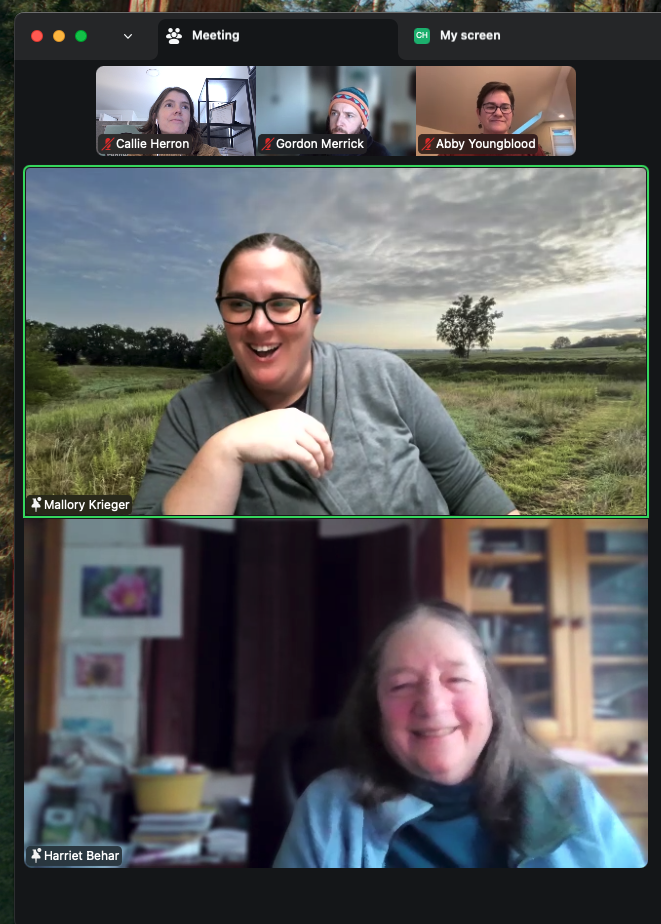
Mallory Krieger and Harriet Behar offer a breakout room report out.
Research Room: Participants noted apparent contradictions—organic operations are more profitable, yet many leave due to economic pressures. The group called for deeper economic analysis of the sector and exploration of payment for ecosystem services as a potential retention tool.
Education Room: The conversation ranged from consumer education challenges to inspector training in soft skills. Participants highlighted how anti-organic prejudice in rural communities creates real barriers to entry and retention. The importance of building organic farming communities emerged as a key theme, along with systemic infrastructure challenges affecting farm viability.
Transitioning to Organic Partnership Program (TOPP) Room: Attendees appreciated the resources TOPP provides but identified a critical gap: converting interested farmers into certified producers. The group explored how TOPP could better support retention, particularly in helping smaller operations navigate new Strengthening Organic Enforcement (SOE) requirements.
Policy Room: Market access emerged as the top concern, along with the need for consistent advocacy messaging that doesn't generalize from individual perspectives. A key discussion point: understanding for whom regulatory burden is truly a barrier, recognizing that both narratives (burden vs. non-burden) may be true for different farmer populations.
What's Next
This data challenges assumptions—particularly that paperwork is the main problem—while confirming that market access and economic viability are key to keeping farmers certified.
We're working on multiple fronts: securing certification cost share reimbursements for farmers, advocating for continued TOPP funding, and strengthening market development programs.
The conversation continues. Find the recording and materials on our resource page, and if you're not already involved in our work, sign up for our newsletter or reach out. We need your voice.