Plains-Region Organic Grain Farmers Share Challenges & What They Need From Advocates at National Organic Convening
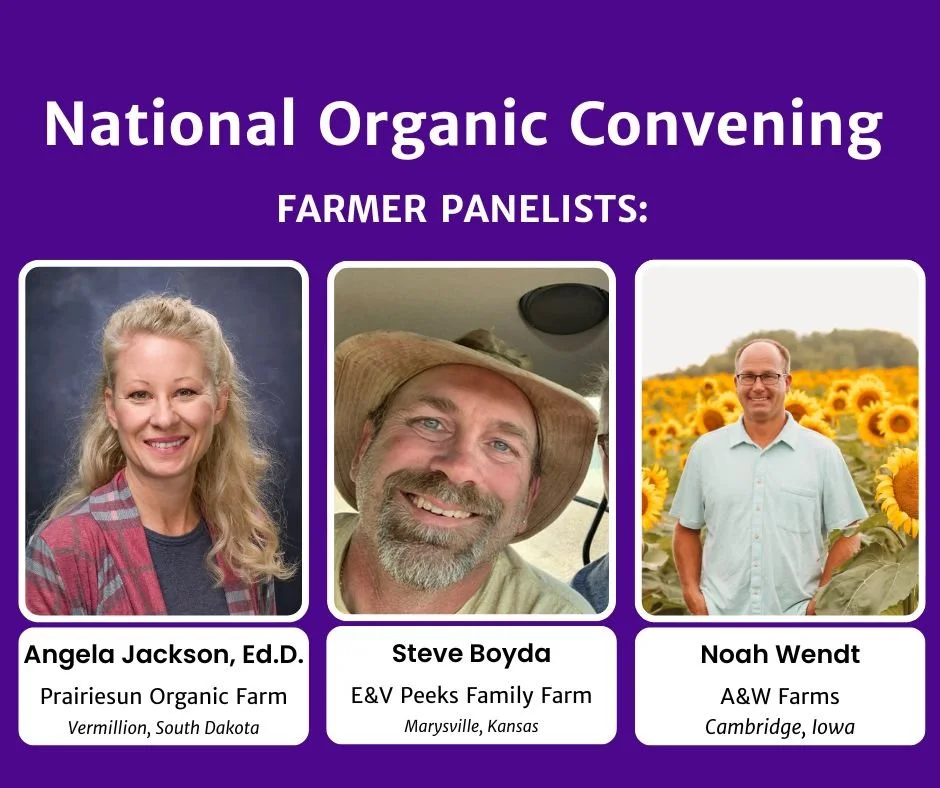
On November 3, the National Organic Coalition’s National Organic Convening brought together organic grain producers for a candid panel discussion about the realities of farming organically in today's market. The panelists included:
Angela Jackson from PrairieSun Organic Farm in Vermillion, South Dakota
Noah Wendt from A&W Farms in Cambridge, Iowa, and
Steve Boyda from E & V Peeks farm in Marysville, Kansas.
When asked about their most pressing challenges, several themes emerged.
Market Access & Economics: In South Dakota and Iowa, the lack of nearby certified buyers means trucking grain long distances, with transportation costs eating away at already thin profits. Farmers often drive considerable miles to market their grain—distances that even organic premiums can't fully offset.
There are critical gaps in regional organic infrastructure, including a need for more certified organic seed processors and grain elevators, as well as food-grade processing facilities that could help farmers diversify their markets. In an effort to address the lack of infrastructure, one panelist started an elevator a few years ago, but realized there were too many issues for it to be viable, including the level of market volatility that made it impossible to predict prices.
Pesticide Drift: One of the farmer panelists explained that pesticide drift is the number one reason producers aren't transitioning to organic in their area. The risk of one spray event from a neighboring field destroying a crop's integrity is too great. In terms of advocacy support, the panelists applauded the Organic Farm Association's (OFA) and the organic community’s work on pesticide drift and urged continued focus on this critical issue.
Some possible solutions to address the challenge with pesticide drift shared during the convening included,
“The label is the law- I have a right to farm organic in this state.”
compensation options to help farmers impacted by drift,
better protections against having to bear the economic cost of a drift event,
educating area applicators and sprayers,
and a need for more open, honest communication about how drift is devastating small family farms.
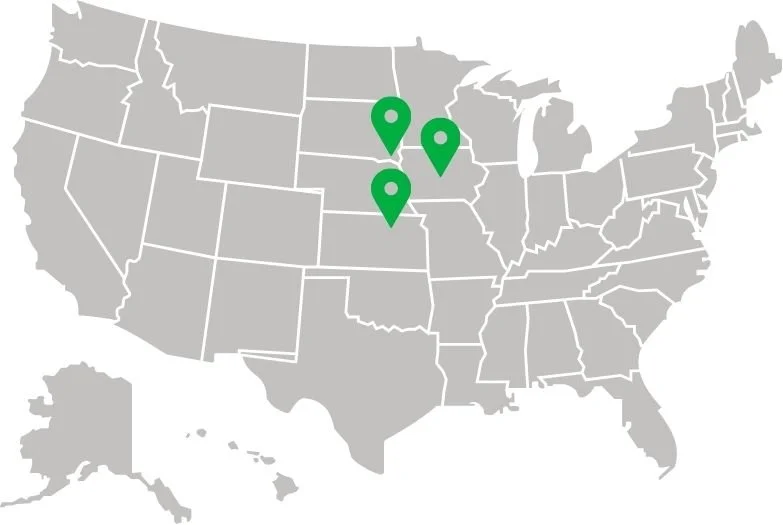
Organic farmer panelists joined us from South Dakota, Kansas, and Iowa.
Organic Seed Availability: All panelists agreed that sourcing organic seed varieties is a big challenge. This is in part due to the consolidation of the seed industry making it difficult to source organic seed that is well adapted to the local environments where their farms are located.
Panelists emphasized the need to encourage organic seed use and increase the availability of organic cash crop seed varieties. Earlier in the convening, Steve Ela (NOC’s NOSB Specialist) noted that the National Organic Standards Board (NOSB) is currently talking about challenges related to organic seed usage and will be putting forward a proposal on this topic.
Several other challenges the panelists are currently confronted with include the price of farmland, lack of crop insurance availability, integrity of organic imports, and imported product causing market volatility.
The panelists praised the Organic Farmers Association (OFA) crop insurance working group, and urged continued advocacy. As one panelist explained, “It’s hard to get people into organic production when the safety net is not there.”
When asked other ways advocacy organizations could support them, the panelists mentioned:
making sure to consult with producers on proposed actions that will affect their operations,
educating consumers to help prevent confusion in the sea of marketing claims,
continuing the ongoing efforts to combat fraudulent imports and ensure organic integrity,
and support for vetting alternative specialty market opportunities.
The panel made clear that producers face a complex web of challenges, from inadequate infrastructure and insurance to market pressures and agrochemical threats, that require coordinated policy action and industry support to ensure the sector's continued growth and viability.
NOC is grateful for Angela, Noah, and Steve’s willingness to share their time and perspective with attendees. If you would like to stay informed about events like this panel and resulting advocacy efforts, please sign up for the NOC newsletter here: https://www.nationalorganiccoalition.org/subscribe.