USDA Reorganization Update: Some Good News for Organic Amidst Broader Concerns
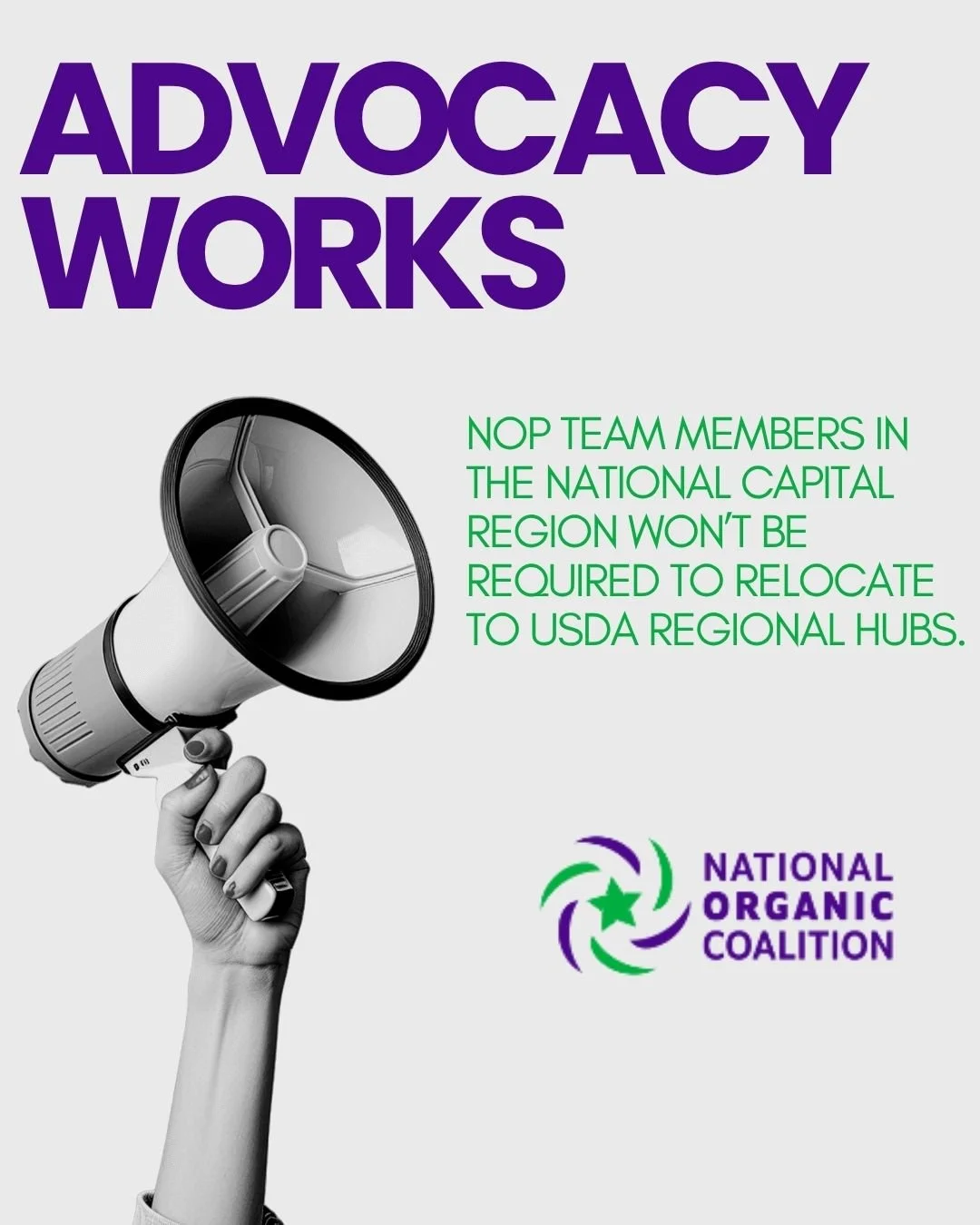
On June 17, USDA announced its reorganization plans for Marketing and Regulatory Programs (MRP) — the mission area that includes the National Organic Program. The news for organic is good: NOP staff based in the National Capital Region will not be required to relocate to one of USDA's regional hubs. Although a positive outcome for NOP, it’s part of a broader troubling reorganization effort.
What this means for NOP
Current NOP staff in the National Capital Region will remain in the capital area, divided between USDA's Washington, D.C. complex and the George Washington Carver Center in Beltsville, Maryland. That includes Jenny Tucker, head of the National Organic Program, along with the program's division leadership and other staff in the area. NOP’s experienced leadership and staff can stay in the region, meaning less risk of further losses of institutional knowledge through forced long-distance relocations.
How we got here
It's been almost a year since USDA first announced a sweeping reorganization plan that would have relocated D.C.-based staff to regional hubs across the country. For NOC, that meant a year of sustained advocacy and community mobilization to make sure that didn’t happen. NOP already lost roughly a third of its workforce last spring and forced relocations on top of those losses risked further weakening the program's capacity. NOC and the broader organic community sent letters, contacted members of Congress and USDA officials, pressed USDA and Congressional leaders on this topic during our March fly-in, and emphasized that retaining NOP’s skilled and experienced team is essential to effective oversight, enforcement, and protection of the organic label.
Reorganization and restructuring impacts on other parts of USDA
MRP is just one of USDA's eight mission areas, and while this week's news is good for organic, other parts of USDA are facing consequential changes.
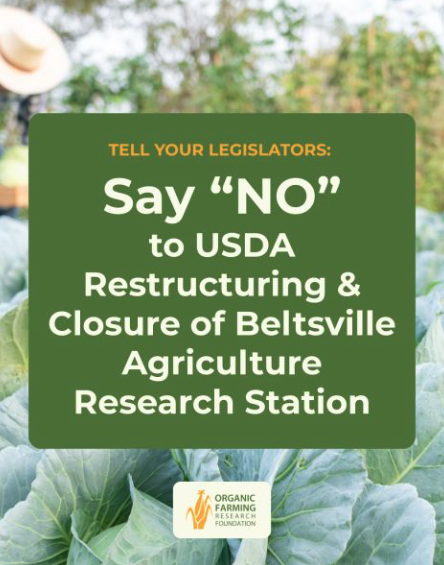
One example worth flagging: under the Research, Education, and Economics mission area, USDA is decommissioning the Beltsville Agricultural Research Center and relocating staff. As the National Sustainable Agriculture Coalition has warned, previous USDA relocations have led to significant losses of experienced staff and reduced agency capacity. The Organic Farming Research Foundation has also noted the troubling impact likely to be felt on long-term research projects and is currently asking supporters of organic research to speak up. More fundamentally, NOC shares concerns raised by colleagues and partners that this process lacks transparency and regard for public input.
Staffing losses outside of reorganization impacts are significant
Beyond the reorganization itself, NOP and the broader USDA have already experienced staffing losses that are straining their ability to carry out essential work. The NOP lost a third of its staff last spring. Although the NOP is avoiding additional losses, they are far from fully staffed. NOP still needs to fill vacant positions and rebuild its capacity. While NOP has posted two positions, NOC will keep advocating for more timely rehiring, effective enforcement, and the resources NOP and other USDA agencies need to do their jobs.
NSAC’s recent blog series puts some numbers behind what staffing losses look like elsewhere at USDA:
The Farm Service Agency lost 8% of its front-line staff in 2025. Forty-two FSA offices ended the year with no FSA county employees at all, and more than a third of FSA local offices saw a net staffing loss over the year.
The Natural Resources Conservation Service (NRCS) lost 23% of its staff between January 2025 and January 2026. The hardest-hit position was Soil Conservationist — the field staff who work directly with landowners on conservation planning — with a loss of 711 positions.
While there is more work to do, today we take care and say thank you
Advocacy works. Your letters, outreach, and engagement were noticed. Today we take a moment to pause and remind ourselves that our collective work helped produce a positive outcome for the National Organic Program.