Organic Advocates Make Their Voices Heard: Recapping NOC’s 2026 Fly-In
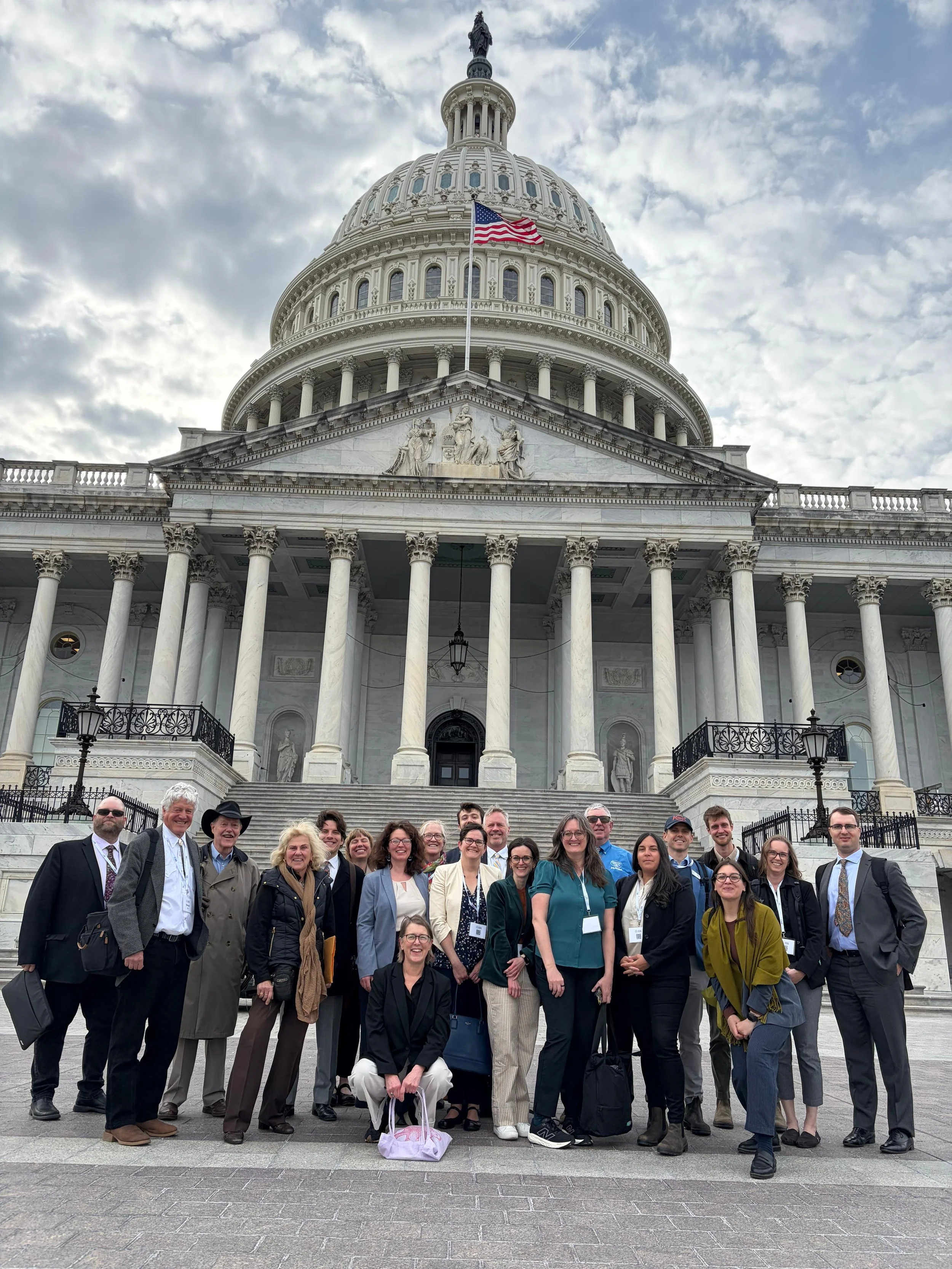
Fly-in attendees in front of the Capitol.
Last week, 24 delegates from 15 states convened in Washington, D.C. for the National Organic Coalition’s annual fly-in, engaging in strategic visits with 45 congressional offices and USDA on issues critical to the organic community—from staffing levels and strong regulations to the urgent need to release certification-cost share funds.
Even in a divided political climate, NOC found common ground on the Hill:
USDA staffing losses are alarming. From the National Organic Program, to Farm Service Agency, to Natural Resource Conservation Service, the staff losses at USDA are far-reaching and troubling. NOC stressed the critical role the NOP plays in safeguarding the USDA organic seal and preventing fraudulent imports.
Cost-share funds must be released. There is no excuse for USDA not having released FY 2025 and FY 2026 organic certification cost share funds already allocated by Congress in the 2025 Reconciliation bill. The money exists, it’s just sitting at USDA. Several Congressional offices have already submitted bi-partisan letters urging USDA to get the money out to farmers, and after meeting with NOC, many others committed to taking action.
NOC also urged Congress to give us the farm bill that organic deserves: increased investment in organic research, a fully funded cost-share program, and adequate resources for NOP to keep pace with the fast-growing organic industry.
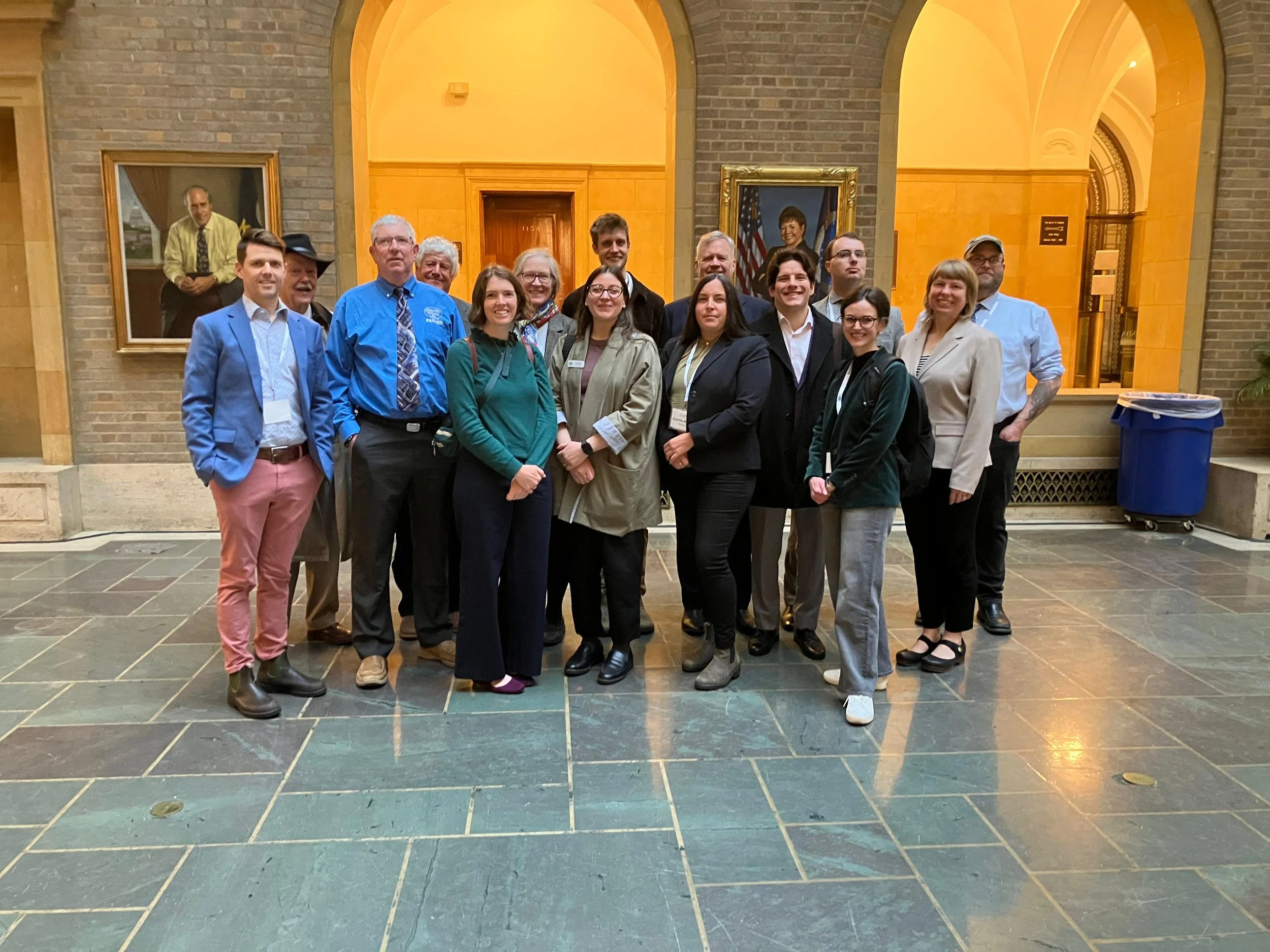
Attendees waiting to meet with USDA leadership.
What NOC heard at USDA
On Friday, NOC brought its concerns directly to USDA leaders, meeting both with political leaders from Marketing and Regulatory Programs (MRP), which oversees the NOP, as well as with the Farm Service Agency (FSA), which administers the organic certification cost-share program. Here’s what stood out:
NOP staffing: MRP leadership acknowledged the importance of retaining knowledge and expertise, but offered no information on rehiring plans or the USDA reorganization- a restructuring that could result in even more NOP staff losses.
Cost-share delays: FSA explained that because the cost-share funding was a part of last year’s Reconciliation bill, it must go through a formal rulemaking process before funds are released. When pressed on a timeline, they had no answers but urged NOC to keep pressing and asking for answers.
Spring NOSB Meeting: NOC thanked USDA leaders for moving forward with an in-person National Organic Standards Board meeting in Omaha and stressed the importance of the NOSB’s role in protecting organic standards. NOC urged USDA to publish the federal register notice for the meeting to ensure that organic farms and businesses could provide comments directly to the Board in advance of the meeting.
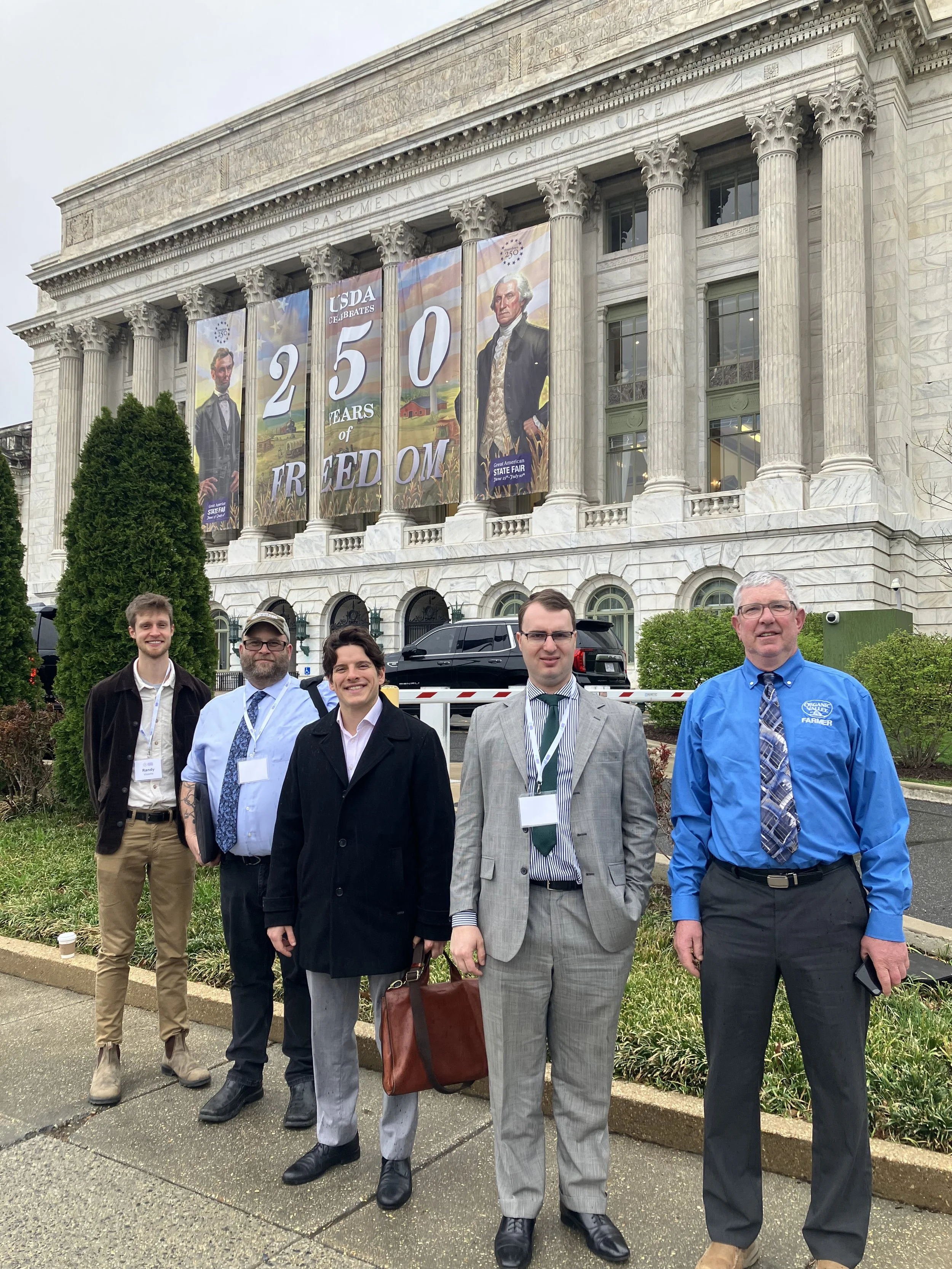
Farmers from Massachusetts, Maine, Ohio, and Washington state along with Organic Farming Research Foundation prepare to join other attendees inside the USDA South Building.
What’s at Stake: Farmers & Advocates Weigh In
Most importantly, Congress and USDA heard directly from farmers, food co-ops, manufacturers, and other advocates, about the impact of USDA’s action and inaction on their farms and businesses:
Strong regulations matter. A dairy farmer praised the Origin of Livestock (OOL) rule, noting that closing the loophole on the ability to continuously transition conventional animals has contributed to a more stable and predictable market environment for organic dairy producers. His perspective was echoed by retailers and manufacturers in the room, whose businesses depend equally on the consumer trust that strong, enforced regulations make possible. NOC urged USDA to keep all recently finalized regulations in place and ensure they are adequately enforced to protect the integrity of the organic marketplace and the investments made by organic operations. In addition to OOL, the regulations mentioned include Strengthening Organic Enforcement (SOE), Organic Livestock and Poultry Standards (OLPS), and Organic Market Development for Pet Foods and Mushrooms.
The organic market is a lifeline. Every farmer present credited the organic market, and consumer trust built through strong regulation, as being foundational to what has kept them in business.
The need for cost-share. Multiple farmers highlighted the urgent need for cost-share money to support spring inputs and farm improvements, money they’d immediately reinvest in the rural economy. Farmers underscored how critical these dollars are for new and beginning farmers, who face certification costs before they’ve generated income.
The conversations that took place during fly-in week reinforced a simple truth: supporting organic means supporting domestic production, human health, and American farmers.
What can you do right now?
Send a letter to USDA urging immediate release of cost-share funds.
Donate to help NOC keep pressure on USDA and Congress.
Every year the National Organic Coalition brings together a broad cross-section of the organic community— from farmers and food processors to consumer food co-ops, certification agencies, and environmental groups, to bring firsthand perspective to the halls of Congress. If your organization would like to learn more, please visit our member page. Participation in the fly-in is limited to National Organic Coalition members. To learn more about becoming a member email abby@nationalorganiccoalition.org or visit our website.
NOC extends its deep appreciation to Equal Exchange, National Co+Op Grocers, PCC Community Markets, Nature’s Path Organic Foods, and Riverside Natural Foods for their financial and in-kind support of the fly-in.