Fall 2026 Pre-NOSB Meeting Recap: Lessons from Split Operations and Inspector Training Developers
A recap of the October 14, 2026 virtual Fall 2026 Pre-NOSB Meeting.
Over 100 members of the organic community joined NOC virtually for the Fall 2026 Pre-NOSB meeting, one of two public virtual NOC events taking place this fall. These events take the place of NOC’s typical full-day in-person Pre-NOSB meeting in conjunction with the National Organic Standards Board meeting.
The afternoon started with a NOSB update from NOC NOSB Specialist, Steve Ela, followed by a farmer panel on lessons from split and parallel operations, and a moderated session on building and strengthening the organic workforce.
National organic standards board Update
Ahead of each National Organic Standards Board meeting, NOC convenes its NOSB subcommittee with individuals from our 14 members: representing organic farming organizations, consumer and environmental advocacy groups, retailers, and businesses across the organic supply chain, including processors and manufacturers, as well as individuals with scientific and technical expertise. They meet twice weekly to grapple with the topics on the NOSB agenda and establish NOC’s positions, which are then turned into written comments. During the Pre-NOSB meeting, Steve shared some key perspectives with the audience including:
Organic Seed Usage: NOC strongly supports the work to find ways to increase organic seed usage, including addressing the commercial availability exemption that is not serving its intended purpose. Organic agriculture should start with organic seed.
Ivermectin: NOC supports the use of Ivermectin in the injectable form for emergency use for New World Screwworm control if used under veterinary supervision with a 7-day pasture withdrawal.
Carrageenan: NOC urges the removal of carrageenan from the National List.
See the Pre-NOSB slide deck for more detail on the NOSB update and view NOC’s full written comments for the Fall 2026 NOSB meeting.
Farmer panelists shared insight on why they farm some acres organic and some conventionally.
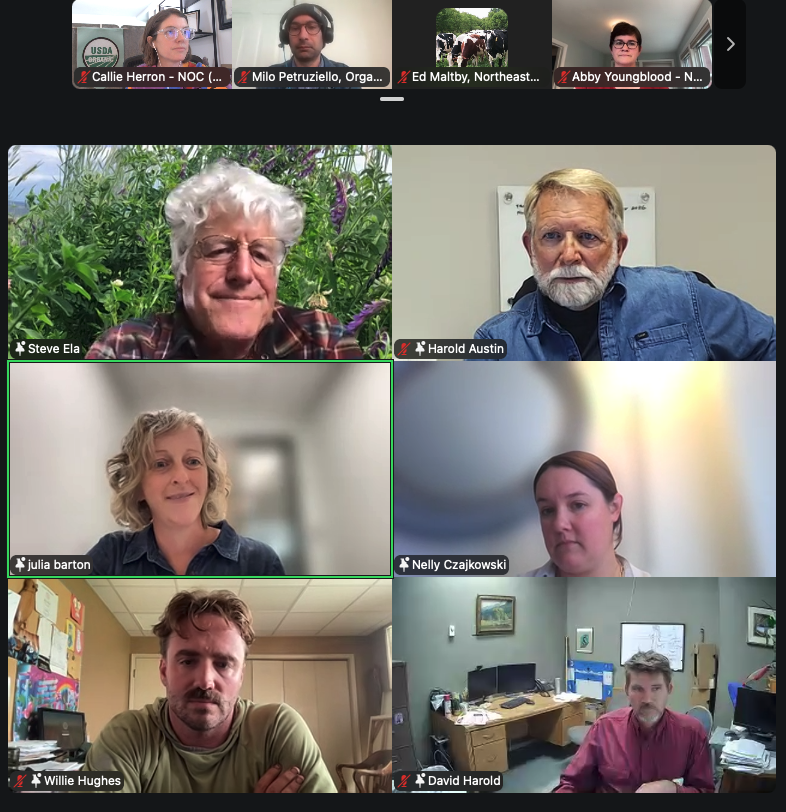
Farmer panelists represented farms ranging in size, commodity, and geography.
The panel included:
A Massachusetts farmer in the process of taking over the family vegetable farm, which has shrunk its organic acreage to 25 to 40 acres out of 300
A Wisconsin seed and grain farmer with about 1,400 organic acres out of nearly 5,000
A Colorado row crop farmer with more than 200 organic acres out of 1,300
A Washington state fruit grower who is 85% organic on most crops and 100% organic on blueberries
While each panelist valued organic principles, they gave a range of reasons for not certifying all of their acreage, with the need for firmer commitments from buyers as a standout issue. One farmer said they grow organically only when they have a contract for the crop, and that at their scale and price point, they aren’t seeing wholesale demand for organic produce.
Panelists also described the nuances of deciding which acres to farm organically, from uncertainty about whether they’d keep renting land beyond the three-year transition period to new neighborhoods with ornamental apple trees that increased pest pressure. One panelist noted they grow what crops they can organically, but for some crops, like onions, they’ve just found no way to do it successfully. Nitrogen and fertility, weed control, and the timing and workload of every pass at scale were also highlighted as agronomic obstacles.
When asked about what could reduce the burden of certification, panelists noted common issues like paperwork burdens and inconsistencies between certifiers.
All of the panelists expressed interest in putting more acres into organic but explained the practical barriers. Two said that going fully organic would mean shrinking their operations and reducing staff, some of whom have been with them for decades. For these farmers, the balance between organic and conventional is a business decision as much as a values one, and firmer buyer commitments could help tip it toward more organic acres.
Thank you to Organic Farmers Association for their partnership in organizing the farmer panel!
Different inspector training models broaden future workforce and build on each other
The afternoon concluded with a session on building and strengthening the organic inspector workforce. Over the past year, in online convenings and at the Spring 2026 Pre-NOSB Meeting, NOC heard repeatedly that the quality of the certification experience depends in large part on the people doing the work. Inspectors need strong agricultural knowledge, technical expertise, good judgment, communication skills, and cultural competency. They also need to be able to focus on the issues that matter most for organic integrity, rather than creating unnecessary paperwork or administrative burdens.
The session featured presentations about two new programs designed to address this challenge:
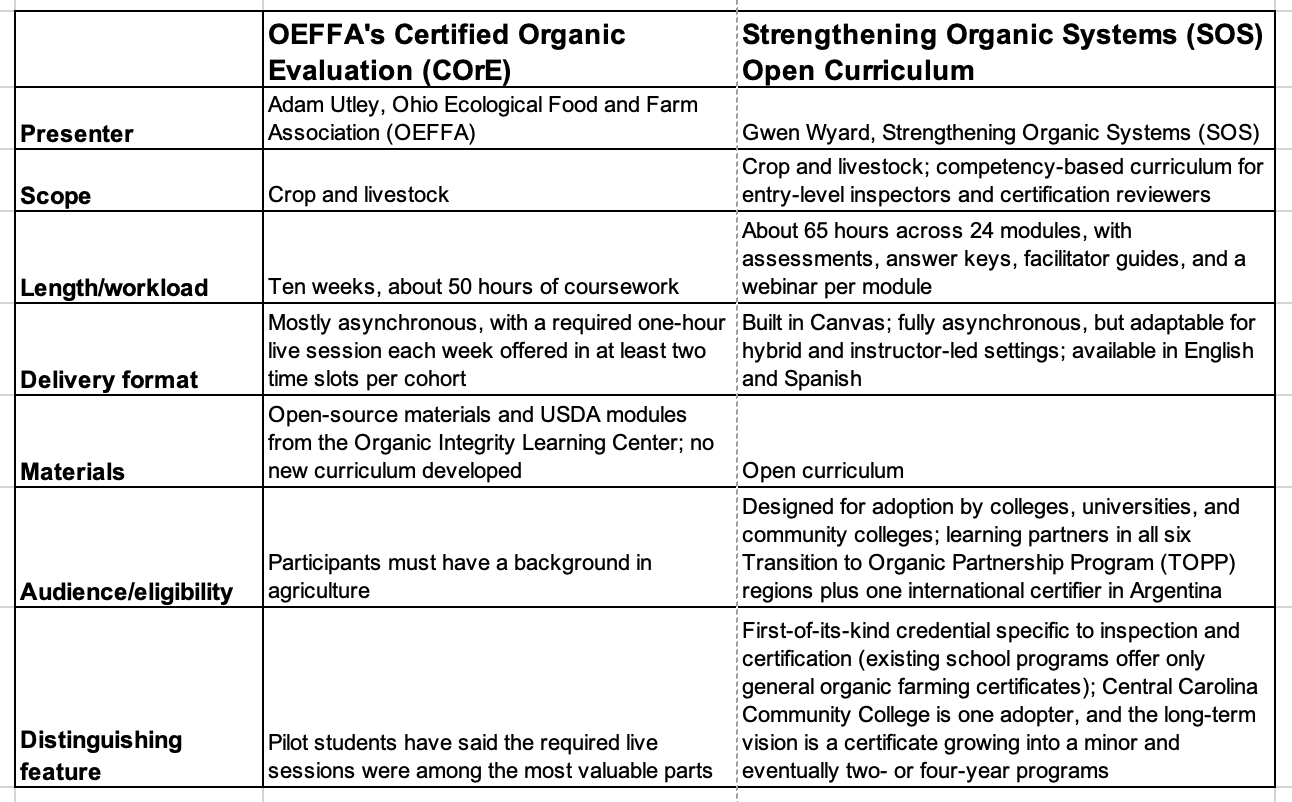
Adam said he entered the profession only because live online International Organic Inspectors Association (IOIA) training became available during the pandemic, when he was working part-time in retail with two young children. His point was that if the field does not offer a mix of formats, it risks excluding people who could become tomorrow's inspectors, trainers, and mentors. Panelists agreed there is no one-size-fits-all model.
The two new training models along with IOIA in-person training add value because they serve different audiences.
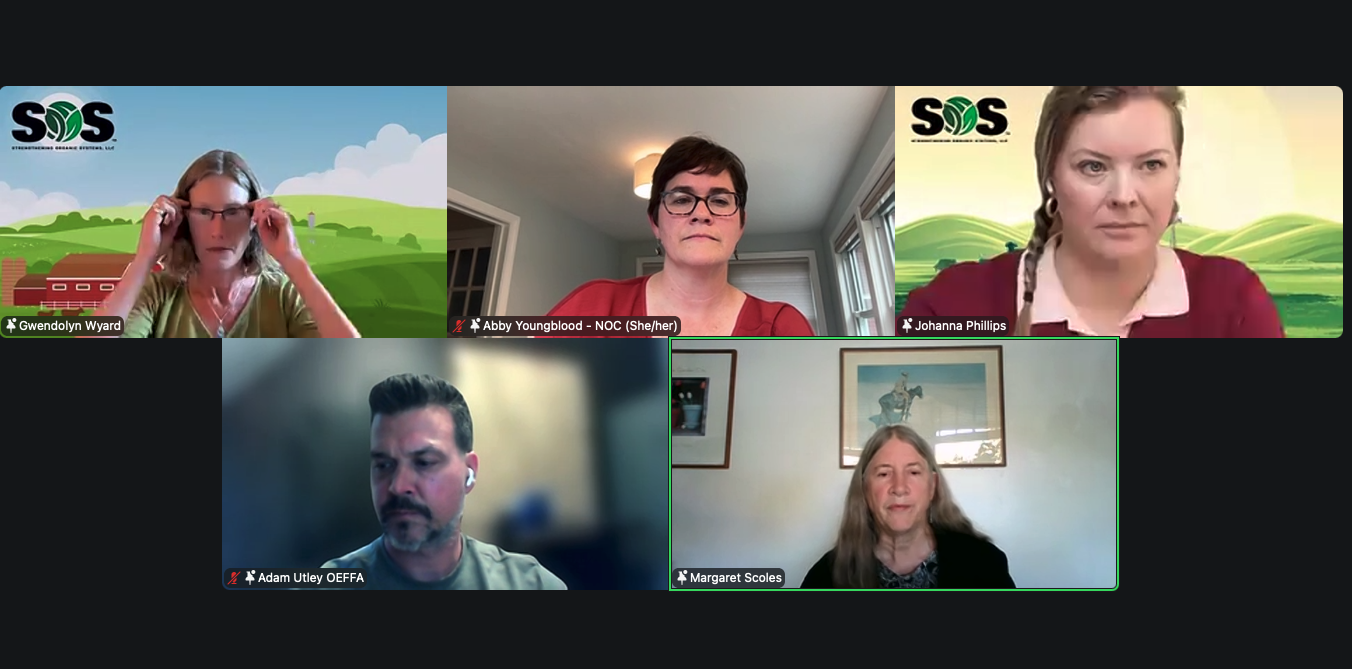
Margaret Scoles, International Organic Inspectors Association Executive Director, joined OEFFA and SOS to talk about inspector training models.
IOIA offers in-depth, cohort-based training with seasoned instructors, OEFFA's COrE gives working adults a structured path with no time off required, and SOS's free curriculum can be hosted by colleges, universities, and extension programs to reach students, career changers, and farmers who would otherwise never hear about inspection as a career. Johanna Phillips from SOS described the curriculum as a gateway into organic production and pointed to young people in FFA and 4-H who want to stay in agriculture as a natural audience.
New models for organic inspector training, coupled with IOIA’s offerings, play an important role in addressing the need for skilled inspectors, which is a critical piece to a farmer’s overall success and satisfaction with being certified organic.
In addition to training, mentorship is key.
The session participants highlighted access to mentors as a big constraint on expanding the inspector workforce since experienced inspectors have limited time, mentoring is seasonal, and coordination is a lot of work. So while new approaches to training the next generation of inspectors will expose new people to the profession and give them the foundation, there’s still plenty for the organic community to tackle, like the inspector mentorship bottleneck, to ensure the future organic workforce is there and equipped with the tools they need to succeed.
For more information shared during the event, visit the Fall 2026 Pre-NOSB Resource Page.
The National Organic Coalition is grateful for the opportunity to create spaces like the Pre-NOSB meeting, a place where the organic community can come together, across all the different roles we play, to wrestle honestly with the challenging topics of the day. Events like this don't happen without support. If you value this work and want to help make it possible, please consider making a donation to NOC.