Depleted USDA Faces Challenges Serving Farmers
Written by guest contributor Randy Violette, Technical Assistance Provider & Policy Coordinator at NOFA/Mass. NOFA/Mass promotes organic agriculture through education and advocacy and is the Massachusetts chapter of the Northeast Organic Farming Association, a member of the National Organic Coalition. For more content like this from NOFA/Mass sign up for their newsletter here.
In our sensationalized, herky-jerky news environment, we often get caught up in the most outrageous and infuriating headlines. We know that this rapid churn in the news cycle is at least partly on purpose–it keeps us from putting sustained attention on issues. It’s in this way that policy change sometimes happens without our noticing.
That’s currently taking place at the United States Department of Agriculture (USDA) and its agencies. The first weeks of the Trump Administration when the Department of Government Efficiency (DOGE) was recklessly slashing programs and government positions feels like ages ago. So much has happened since then, and the loss of government jobs isn’t a particularly attention-grabbing headline, but the impacts of USDA staffing losses are already being felt by farmers and others.
Loss of USDA & NRCS Staff
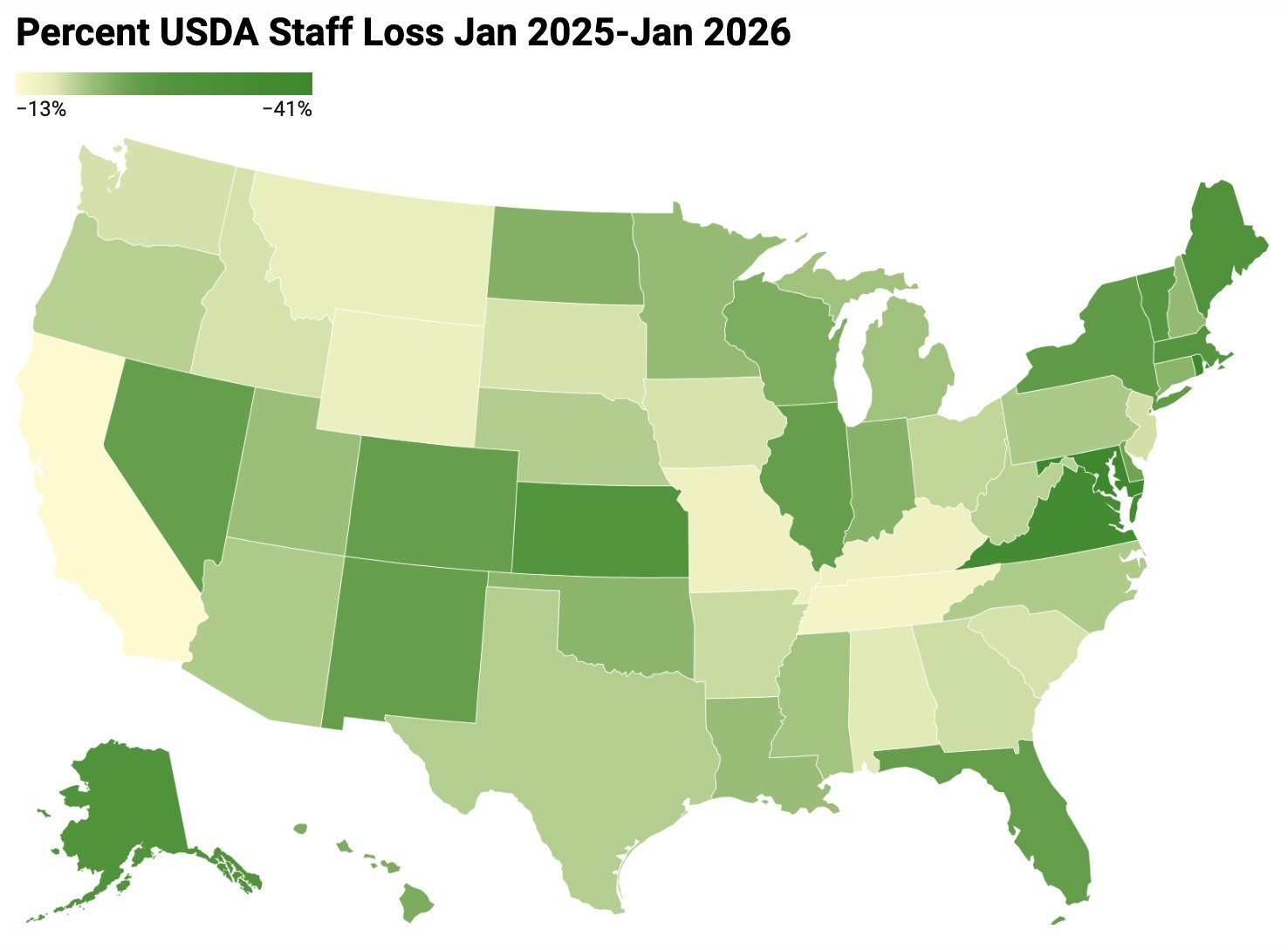
Image credit: National Sustainable Agriculture Coalition
Data sources: OPM, FOIA
From January 2025 to January 2026, the USDA lost approximately 20,000 employees, a nearly 20% decrease. According to analysis by the National Sustainable Agriculture Coalition (NSAC), approximately 75% of those losses can be attributed to DOGE’s Deferred Resignation Program, which was created to encourage federal employees to voluntarily leave their positions. In July 2025, Secretary of Agriculture Brooke Rollins released a memo announcing a planned reorganization of the USDA. The reorganization plan claims that restructuring the department is necessary to bring USDA closer to its customers, eliminate needless bureaucracy, and “ensure the size of USDA’s workforce aligns with financial resources and priorities.” The memo claimed that much of the recent growth of the department came from temporary funding sources, so this reduction is required “to make certain USDA can afford its workforce.” Rollins claims that keeping so many staff in the National Capital Region is too expensive, and that many of them would better serve customers by relocating to five regional hubs spread across the country. However, just 3.24% of all USDA employees worked in the capital region as of January 2025, and 98% of the USDA staff lost in 2025 were outside of DC.
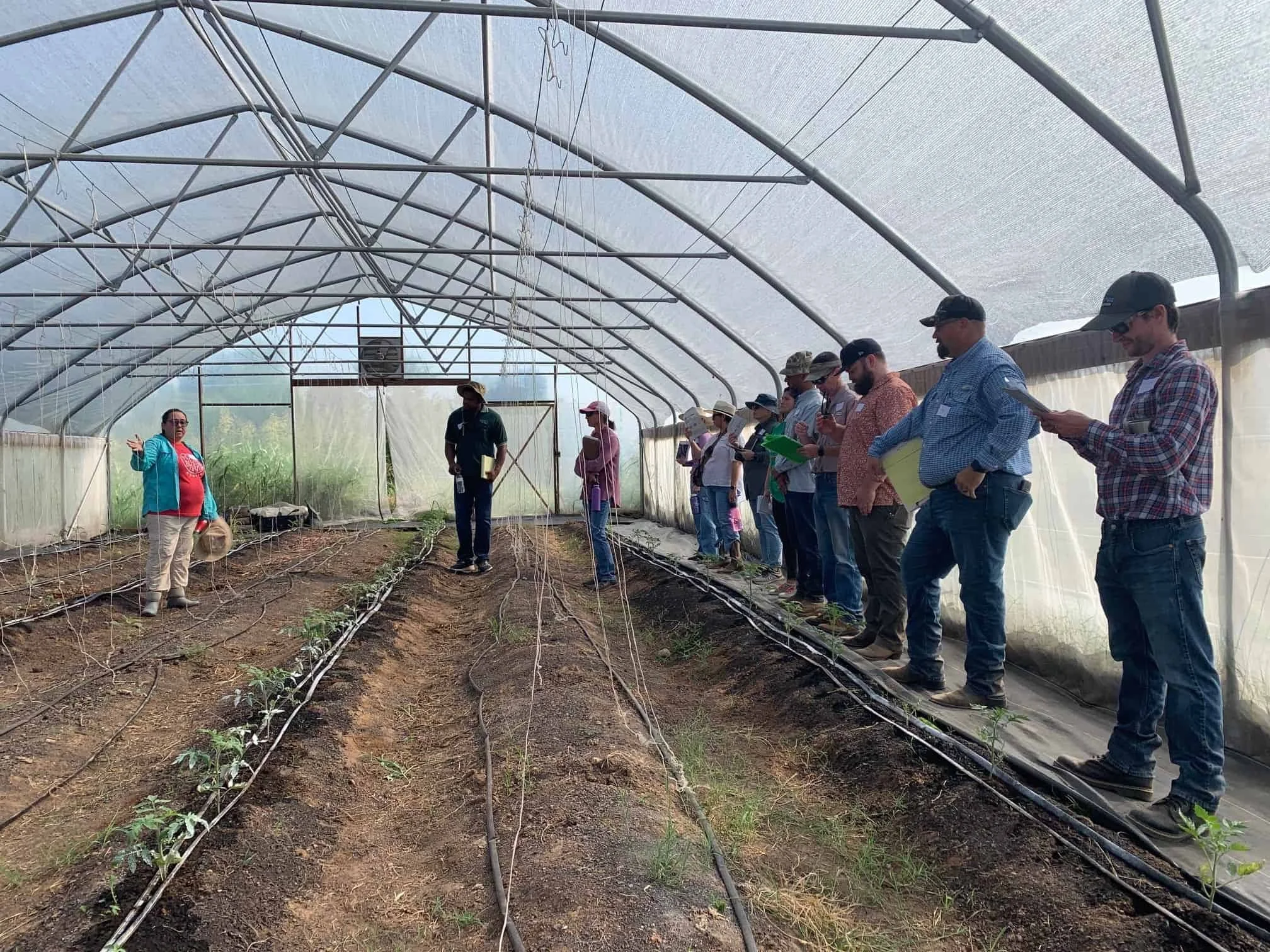
NRCS agents learning from an organic farmer at an NRCS sponsored farm tour in Texas
Image credit: Organic Farming Research Foundation
Staffing at the state and county levels have been hit the hardest. Massachusetts was in the top ten states in percentage of USDA staff lost since the start of 2025 (27%). In the official comment period for the reorganization plan, the loss of local oversight and expertise was frequently cited as a top concern. A reduction of agents at the state and county levels not only means the loss of expertise and long-standing relationships with farmers, it also means fewer people to review applications and disburse funding. NSAC notes that the Farm Service Agency (FSA) has no staff left in dozens of counties nationwide, leaving some farmers with few options but to travel long distances to visit offices or give up trying altogether. Farmers across the country, including farmers in Western Mass, have reported challenges getting in touch with agency staff at their local offices. Many more have cited long wait times for program applications and previously contracted funding.
The Natural Resources Conservation Service (NRCS), who administers popular agricultural conservation programs and works with growers to protect soil, water, and other resources, has lost 23% of its staff since between January 2025 and January 2026. NRCS staff provide technical assistance, financial support, and guidance to farmers, so their attrition means farmers have less local experts to turn to for conservation advice and funding. This is translating to immediate negative impacts–the Institute for Agriculture and Trade Policy (IATP) reports that acceptance rates for the Environmental Quality Incentives Program (EQIP) and Conservation Stewardship Program (CSP) fell sharply in 2025. All of this comes at a time when farmers overwhelmingly continue to face difficult economic conditions.